Many parents wonder when their baby should see the dentist for the first time. Some assume they should wait until several teeth come in, while others may not think about dental care until there is a visible concern. However, infant dentistry can begin much earlier than many families realize.
An infant dentist can help parents understand their baby’s oral development, build healthy habits early, and spot potential concerns before they become bigger problems. Whether your baby has one tooth, several teeth, or no teeth yet, early dental care can support long-term infant dental health and help parents feel confident caring for their baby’s smile.
How Infant Dentistry Supports Dental Hygiene for Infants
Infant dentistry is not just about checking teeth. It also helps parents learn how to care for their baby’s gums, teeth, tongue, and overall oral health from the very beginning. Good dental hygiene for infants may include cleaning the gums before teeth appear, brushing as soon as the first tooth comes in, understanding teething changes, and learning which feeding habits may affect the teeth.
An infant dentist can also answer questions about toothpaste, bottles, pacifiers, thumb-sucking, teething discomfort, and early signs of tooth decay. These early visits give parents personalized guidance instead of leaving them to guess what is normal and what needs attention.
For parents who want a deeper dive, Grin Gallery Pediatric Dentistry’s infant oral health resource walks through how to care for a baby’s mouth from birth through the first birthday.
When to Schedule First Dentist Appointment for Your Baby
If you are wondering when to schedule first dentist appointment for your baby, the general recommendation is by your baby’s first birthday or within six months of the first tooth appearing. This timing allows the dentist to check how your baby’s mouth is developing and help you start the right habits early. Parents do not have to wait until their baby has several teeth. The first visit is usually simple and focused on prevention. It gives the dentist a chance to check the gums, any erupted teeth, oral tissue, and early bite development while giving parents guidance on home care.
Starting early can also help your child become familiar with the dental office before they are old enough to feel nervous or resistant. When dental visits become a normal part of life early on, children often feel more comfortable with dental care as they grow.
What Happens at an Infant Dentist Appointment?
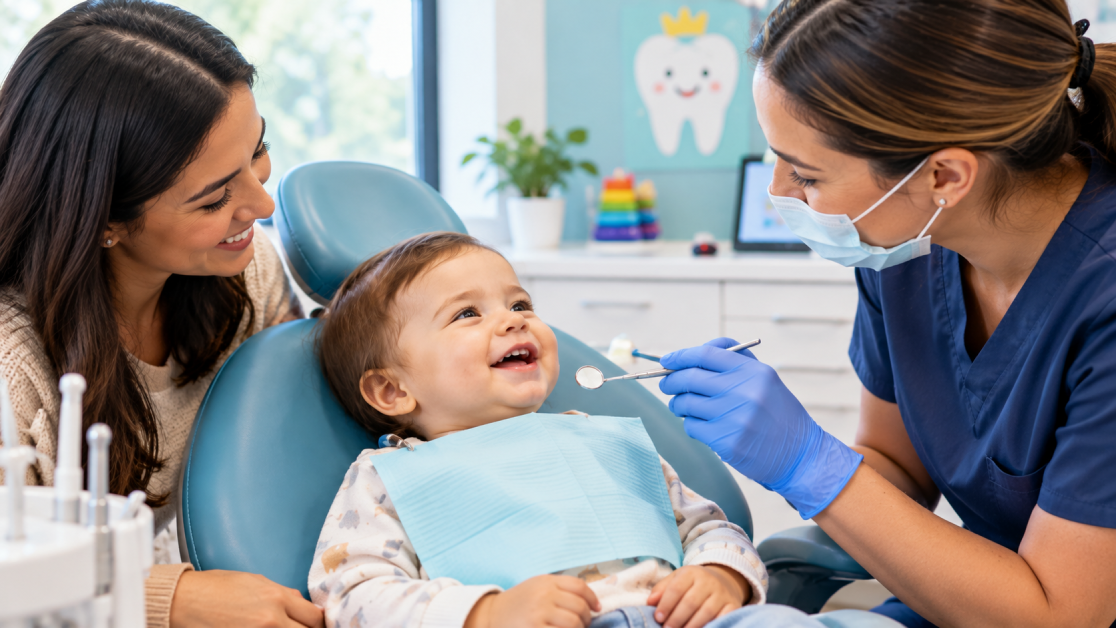
Anxious parents often wonder what happens at an infant dentist appointment and whether it will be too much for their baby. The good news is that a baby’s first dental visit is usually brief and focused on comfort. During the appointment, the infant dentist gently examines your baby’s gums, any teeth that have come in, the bite as it begins to develop, and the surrounding oral tissue. The dentist also looks for early signs of decay, tongue tie, feeding-related concerns, or anything that could affect your baby’s oral development.
A large part of the visit is also parent education. The dentist may discuss how to clean your baby’s mouth, when to begin brushing, how much toothpaste to use, what to know about teething, and how feeding habits can affect infant dental health. Parents can also ask questions about bottles, pacifiers, thumb-sucking, fluoride, or any concerns they have noticed at home. The goal of the appointment is not to overwhelm your baby. It is to create a gentle first experience while giving parents helpful tools to care for their baby’s smile.
Signs Your Baby May Need an Infant Dentist Sooner
While every baby should have a first dental visit by age one, some babies may need to see an infant dentist sooner. Parents should consider scheduling earlier if they notice anything unusual or have concerns about their baby’s mouth, feeding, or tooth development.
Your baby may need an infant dentist sooner if you notice:
- Trouble latching or feeding
- White, brown, or dark spots on the teeth
- Clicking sounds while nursing or bottle-feeding
- Signs of possible tongue tie
- Swollen, irritated, or bleeding gums
- Tooth injury or trauma
- Ongoing teething discomfort
- Questions about brushing, toothpaste, bottles, or pacifiers
Parents do not need to wait until something feels serious. If you are unsure whether a concern is normal, an infant dentistry visit can help you get answers early.
How to Choose an Infant Dentist for Your Baby’s First Visit
Choosing the right infant dentist can make your baby’s first dental appointment feel easier for both you and your child. Infant dentistry requires patience, a gentle approach, and a strong understanding of early childhood oral development.
When choosing a dentist, parents should look for:
A pediatric-focused dental office: Babies and toddlers need a different approach than older children or adults. A pediatric dentist is trained to care for young children in a way that is age-appropriate and comforting.
A calm environment: Your baby’s first dental experience should feel relaxed, not rushed. Look for a dental office that understands how to make early visits simple and positive.
Parent education and support: Infant dentistry should help parents feel confident. A good dentist will explain what they see, answer questions, and provide guidance for home care.
Experience with infant oral development: The dentist should understand teething, tooth eruption, feeding concerns, tongue tie, early decay, and other issues that can affect infant dental health.
A focus on prevention: The best first dental visits are not only about checking for problems. They are about helping parents prevent problems before they start.
Before scheduling, parents can explore the dentist’s website and read patient reviews to see whether families mention these qualities.
Schedule an Infant Dentistry Visit in Atlanta, GA
If you are ready to schedule your baby’s first dental visit, Grin Gallery Pediatric Dentistry offers infant dentistry in Atlanta, GA, and surrounding communities. Led by Dr. Donielle Williams, Grin Gallery helps parents support their baby’s oral health from the very first visit.
Schedule your baby’s first appointment today to give them a healthy start!
FAQs About Infant Dentistry
Is my baby too young to see a dentist?
No. Babies can see an infant dentist as soon as the first tooth appears or by their first birthday. Early visits are designed to be gentle and helpful for both babies and parents.
Does my baby need teeth to visit the dentist?
Your baby does not need a full set of teeth to visit the dentist. Infant dentistry can include checking the gums, oral tissue, tooth eruption, feeding habits, and early signs of development.
How long does an infant dentist appointment take?
An infant dentist appointment is usually brief. The exact time may vary, but the visit is typically focused on a gentle exam and parent education.
Will my baby cry during the dental visit?
Some babies may cry because they are in a new environment or being examined by someone unfamiliar. This is normal. A pediatric dental team will help make the experience as calm as possible.
What should I bring to my baby’s first dental appointment?
Parents may want to bring their baby’s medical history, a list of questions, insurance information, and any details about feeding, teething, brushing, or concerns they have noticed at home.
Can an infant dentist help with teething questions?
Yes. An infant dentist can help parents understand teething symptoms, safe ways to soothe gums, and when discomfort may need closer evaluation.
Can infant dentistry help prevent cavities?
Yes. Infant dentistry supports cavity prevention by helping parents understand brushing, feeding habits, fluoride use, and early signs of tooth decay.
How often should my baby see the dentist after the first visit?
The dentist can recommend a visit schedule based on your baby’s oral health, development, and risk for tooth decay. Many children continue with regular dental visits every six months.