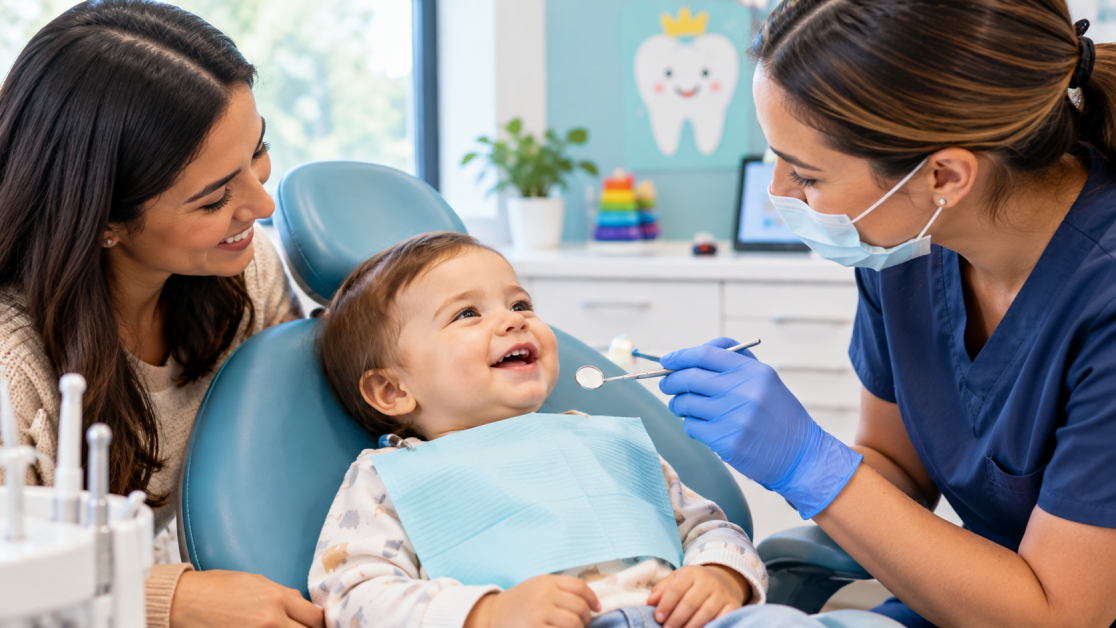
Most kids feel some nerves at the dentist. But for a child with autism, a routine appointment can feel like walking into a storm without a warning. Overhead lights that feel blinding. Sounds from the next room that feel too close. A stranger’s hands moving toward their mouth without explanation.
Parents already know how much effort goes into every first for kids with autism spectrum disorder (ASD). Getting dressed without a battle. Tolerating a new food. Sitting in an unfamiliar seat. The dentist is not just a new experience. It is a concentrated dose of everything that is hardest for their child, all in one room, all at once.
That is why the dentist for kids with autism you choose matters more than most people realize. And it is exactly why Grin Gallery Pediatric Dentistry in Chastain Park, Atlanta, was built the way it was.
Dr. Donielle Williams and her team provide care that is genuinely adapted for children with ASD, not as a side offering, but as a core part of how this practice operates. This post walks through why dental visits are hard for kids with autism, what actually helps, and what families in North Atlanta can expect when they bring their child to Grin Gallery.
Why a Dental Visit Can Feel Like Too Much
To understand what an autism-friendly dentist needs to do differently, you first have to understand what a standard dental office asks of a child with ASD.
The chair is reclined into a position that puts the child flat on their back, a posture that can feel disorienting and vulnerable. The overhead light is directly in their eyes. An unfamiliar person leans in close, wearing a mask and gloves, and begins touching the inside of their mouth with metal instruments. Water squirts in. A suction tool makes a loud, inconsistent noise. The smells are antiseptic and sharp.
For a neurotypical child, this is manageable. For a child whose nervous system processes sensory input more intensely, who depends on predictability to feel safe, and who may not have the language to say “I need a break,” it can be genuinely overwhelming.
Many children with autism also experience what is called sensory hypersensitivity. That means a texture that feels mild to most people can feel painful to them. A sound that adults tune out can feel sharp and intrusive. A quick, unexpected movement can be alarming. These are not behavioral choices. They are neurological realities, and a dentist who does not account for them will struggle to complete even a basic exam.
There are other layers too. Children with ASD often rely on routine and sameness to feel calm. A dental visit, particularly a first one, has no established routine yet. Every new sensory input, every unexpected transition, every moment of uncertainty can activate a stress response. The child is not being difficult. Their brain is doing exactly what it was wired to do.
Add to this the fact that many children with autism have limited verbal ability or process verbal instructions more slowly, and it becomes clear why a standard pediatric dental appointment, even a well-intentioned one, can fall apart quickly.
Why Skipping the Dentist Makes Things Worse
Understandably, families avoid dental appointments when past visits have gone badly. No parent wants to put their child through that again. But delayed dental care has real consequences, and they tend to compound over time.
Several factors put children with autism at higher risk for tooth decay, cavities, gum health, and other oral health problems. Many children on the spectrum take medications that reduce saliva production. Saliva is the mouth’s natural defense against bacteria and acid. Less saliva means more vulnerability to cavities.
Sensory aversions to toothpaste texture, toothbrush pressure, or the sensation of brushing can make home care inconsistent or incomplete. Some children with ASD have a strong preference for certain foods, often softer, starchier, or sweeter options that are harder on teeth. Tooth grinding, which occurs more often in children with developmental differences, wears down enamel over time and warrants close monitoring.
A cavity that goes untreated becomes an infection. An infection causes pain. Pain disrupts sleep, eating, concentration, and behavior. For a child already navigating the demands of ASD, a dental abscess is not just a dental problem. It affects everything.
The right dentist for a child with autism does not eliminate every hard moment. But consistent, properly adapted care prevents most of what families are trying to avoid in the first place.
What an Autism-Friendly Dentist Actually Does Differently
This phrase gets used loosely, so it is worth being specific. Being welcoming and patient is a baseline. A pediatric dentist for autism goes further.
1. Adaptive Environment
The physical space tells a child’s nervous system whether it is safe before anyone says a word. At Grin Gallery, the office uses soft lighting instead of harsh fluorescents. Quiet spaces are available. Weighted blankets and fidget tools are on hand. The noise level is managed thoughtfully. None of this is decorative. Each element is there because sensory overload often begins before the appointment.
This kind of setup is called a sensory-adapted dental environment, and major pediatric dental organizations now recommend it as a recognized clinical standard for working with children with sensory processing differences. Dr. Williams has made it a built-in feature of Grin Gallery’s operations, not something families have to request or explain.
2. Consistent Tell-Show-Do Method
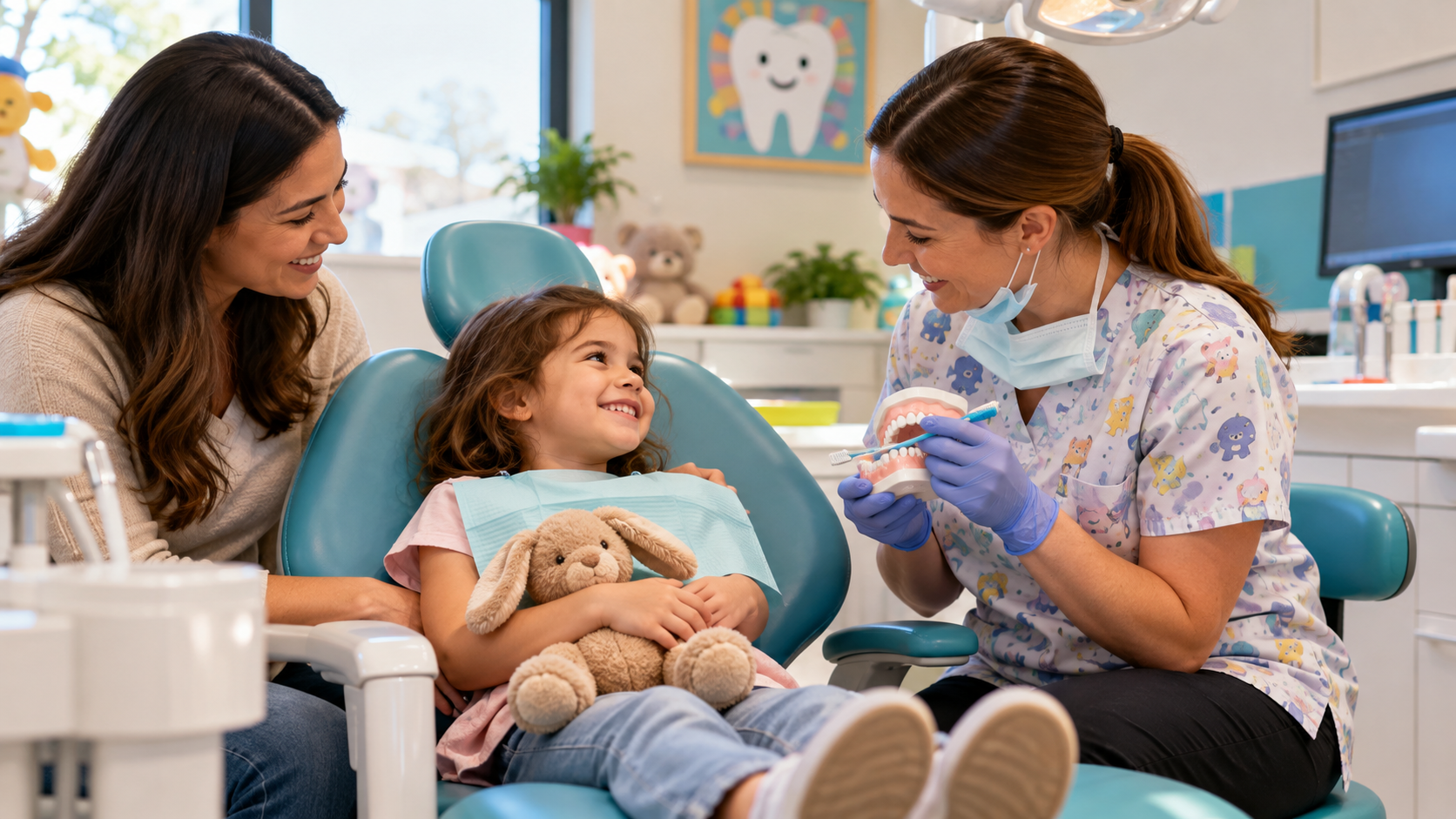
This is one of the most effective behavioral tools in pediatric dentistry, especially useful for children with autism. The dentist first tells the child exactly what is about to happen, in plain, concrete language. Then she shows them, often demonstrating with an instrument outside the mouth or letting the child touch or hold it. Then, and only then, does she proceed.
This method removes the element of surprise. For a child whose nervous system reacts strongly to the unexpected, knowing what comes next makes a significant difference. Dr. Williams uses this approach for every step, not just the first one.
3. Appointments Moving At Child’s Pace
At Grin Gallery, appointments for children with special needs or dental needs are not scheduled on a standard ticking clock. Dr. Williams builds in the time needed to check in with the child, take breaks as necessary, and allow the child to settle before proceeding. If an appointment needs to stop before every planned task is complete, that is fine. Progress with a child with autism is cumulative. One good experience makes the next one possible.
4. Individualized Care Plans
No two children with autism present the same way. A child who is verbal, mildly sensory-sensitive, and has strong positive associations with routine will need something different from a non-speaking child who has significant tactile sensitivity and has had frightening past dental experiences.
Before your child’s first appointment, Dr. Williams wants to know your child’s communication style, their strongest sensory triggers, which tools or approaches have worked or backfired elsewhere, and your goals for the visit. That conversation shapes everything that follows. This is individualized special needs care done correctly: built around one child at a time.
5. Optional Familiarization Visits
If your child has never had a positive dental experience, or if the word “dentist” alone causes distress at home, a familiarization visit is often the right starting point. This is a short appointment with no treatment agenda. The goal is for your child to walk in, meet the team, see the chair, perhaps sit in it, and leave without anything difficult having happened.
That first neutral experience lays the groundwork for a successful exam at the next visit. For some children, two or three familiarization visits are needed before clinical work begins. Dr. Williams supports this completely. The long view is always better than forcing a procedure that leaves a child more afraid than before.
6. Safe Sedation Options For Reducing Anxiety
For some children, sensory and behavioral support alone is not enough to complete treatment comfortably and safely. Grin Gallery offers nitrous oxide and safe sedation options for children who need them. These are never the first step, but they are a legitimate and sometimes necessary tool. Dr. Williams discusses sedation directly with parents, explaining the rationale, the process, and what to expect, so families can make an informed decision.
7. Gentle & Minimally Invasive Treatment
When restorative work is needed, the approach at Grin Gallery is minimally invasive. Air abrasion technology removes decay with far less noise, vibration, and physical sensation than traditional drilling. For children with heightened sensitivity to oral sensations, this is not a minor upgrade. It can be the difference between a manageable procedure and one that ends the appointment early.
Preparing Your Child Before the Visit
Parents are the most powerful variable in how a dental visit goes. The work that happens at home in the days before an appointment can change the entire outcome.
1. Talk about it ahead of time, concretely. Give your child specific information rather than vague reassurance. “On Tuesday, we are going to the dentist. You will sit in a chair that leans back. The dentist will count your teeth with a small mirror. She will rinse and dry your teeth. Then we are done, and we go home.” Specificity is what helps a child with ASD build a mental map of what is coming.
2. Use a social story. A simple, illustrated sequence of what happens at a dental visit is a tool that many families with autistic children find genuinely useful. These can be created at home using photos from the practice’s website, or Dr. Williams’ team can provide visual supports to take home before your child’s first visit.
3. Practice the physical experience. Get your child used to opening their mouth wide on request. Let them look in a mirror while you gently touch their teeth with a soft toothbrush. The more familiar the physical sensation is before the appointment, the less novel it feels in the chair.
4. Keep home oral care consistent. If your child has strong aversions to brushing, experiment with toothbrush types, flavors, and timing until you find something that works. Some children with sensory-seeking tendencies actually tolerate an electric toothbrush better because the vibration is predictable and stimulating rather than random. For children who avoid the sensation entirely, very soft bristles and unflavored toothpaste can reduce the friction. Building consistent brushing and hygiene habits at home is the single best thing a family can do to reduce the need for intervention at the dental office.
5. Call the office before you come. This is not optional for first visits. Call 404-458-9908 and talk with our team about your child’s history, their most significant sensory sensitivities, what communication style works best for them, and whether a familiarization visit makes sense before a full exam. The more Dr. Williams knows before you walk in, the more effective she can be on the day of your appointment.
Oral Health Challenges Specific to Children with Autism
Understanding these helps parents stay ahead of problems rather than reacting to them.
1. Gag reflex sensitivity: Many children with autism have a heightened gag response. This makes dental exams more challenging, but also means that toothbrush placement and head positioning at home matter. Using a shorter-handled brush and approaching from the side rather than directly can help.
2. Dietary patterns: If your child’s diet is limited to specific textures or flavors, it may skew toward foods that are harder on teeth. This is worth discussing with Dr. Williams so she can tailor her preventive care recommendations to what is realistic for your child.
3. Medication-related dry mouth: If your child takes medications commonly used in ASD management, ask Dr. Williams whether dry mouth is a risk and how to counter it. Increased water intake, specific rinses, and more frequent checkups are common strategies.
4. Delayed cooperation with home care: Children with ASD sometimes do not independently develop the habit of tolerating tooth brushing the way neurotypical children do. This is not stubbornness. It is a learning challenge that responds well to structure, visual schedules, and consistent positive reinforcement.
What Grin Gallery Offers Families in North Atlanta
Grin Gallery Pediatric Dentistry is located at 4920 Roswell Road NE, Suite 40, Atlanta, GA 30342, in the Fountain Oaks Shopping Mall near Chastain Park. The practice is open Monday, Tuesday, Thursday, and Friday from 8 AM to 4 PM.
Dr. Donielle Williams is board-certified in pediatric dentistry. That certification requires specialized training well beyond a general dental school education, with a specific focus on child development, behavioral management, and the treatment of children with developmental and special needs. She is also a parent, which gives her a practical understanding of what families are managing outside the clinical setting.
The practice serves families from across North Atlanta, including Brookhaven, Sandy Springs, Dunwoody, Vinings, Roswell, and surrounding communities. All the services a child might need are available in one location: preventive care, restorative procedures, emergency treatment, special-needs dentistry, infant dentistry, and minimally invasive options. Families don’t have to test multiple providers or repeat the difficult process of introducing their child to a new environment.
For families managing the cost of care without insurance, Grin Gallery’s in-house membership plan covers routine exams, cleanings, and fluoride treatments, with discounts on additional services. This can be especially relevant for families whose insurance does not fully cover the longer appointment times that special needs dentistry often requires.
If your child has an urgent dental issue and cannot wait, same-day emergency care is available for established patients.
A Note to Parents Who Have Tried Before
If your child has had a bad experience at another dental office, it does not mean they cannot have a good one. It often means the previous setting was not built for a child like theirs.
Many families come to Grin Gallery after years of canceled appointments, incomplete exams, and mounting anxiety around dental care. What they find is a practice that did not approach their child the way the last one did, and that made all the difference.
Getting dental care right for a child with autism takes longer at first. There are more conversations, more gradual steps, and sometimes more visits before a full exam is complete. But the result is a child who can sit in the chair, a parent who is no longer dreading the call to reschedule, and a dental record that reflects real, ongoing care.
That is the version of this that is possible. Grin Gallery is here to help your family get there.
Sensory-Friendly Dentist & Experience Is All Your Kid Needs!
Autism does not make dental care impossible. It makes it more important to choose the right dentist for your child with autism. A sensory-adapted environment, a provider trained in behavioral management, a care plan that accounts for your child’s specific profile, and the willingness to go at their pace, and these things change the experience entirely.
Dr. Donielle Williams and the team at Grin Gallery Pediatric Dentistry in Chastain Park have built a practice around exactly that kind of care. If you are looking for an autism-friendly dentist in North Atlanta who understands what your child needs, we would be glad to talk.
Frequently Asked Questions
What is an autism-friendly dentist?
An autism-friendly dentist is a provider who has both the training and the physical office setup to serve children on the autism spectrum effectively. This includes sensory-adapted environments, behavioral techniques like tell-show-do, individualized care plans, flexible scheduling, and a willingness to work at the child’s pace. It is a clinical approach, not just a personality style. At Grin Gallery, this is built into how every autism dental visit is structured.
At what age should a child with autism first see a dentist?
Dental associations recommend a first dental visit by age one for all children, or within six months of the first tooth appearing. For children with autism, earlier is better because it builds familiarity before clinical needs arise. Infant dentistry appointments can be scheduled even before that if it helps ease your child into the environment.
How do I find a pediatric dentist for autism near me in Atlanta?
Grin Gallery Pediatric Dentistry in Chastain Park specifically offers special needs dentistry for children with ASD across North Atlanta, including Brookhaven, Sandy Springs, Dunwoody, Vinings, and Roswell.
What if my child refuses to open their mouth at the dentist?
This is common and something Dr. Williams handles regularly. She uses gradual exposure, tell-show-do sequencing, and calm, predictable language to help a child move at their own pace. Familiarization visits are also an option, allowing the child to spend time in the office without any clinical work. Safe sedation options are available for children who need additional support to complete treatment safely.
Does Grin Gallery offer sedation for children with autism?
Yes. Nitrous oxide and other sedation options are available and are discussed with parents as part of the care planning process. Sedation is not the automatic first step, but it is a legitimate clinical tool for children who cannot comfortably complete treatment otherwise. Dr. Williams walks parents through the options, the reasoning, and what to expect during every special needs appointment.
Can my child with autism also get emergency dental care at Grin Gallery?
Yes. Grin Gallery offers same-day pediatric emergency care for established patients. If your child has a toothache, chipped tooth, or another urgent dental issue, call Grin Gallery Kids as soon as possible.
What should I bring to my child’s first dental appointment?
Bring anything that helps your child feel calm and secure, whether that is a favorite small toy, a comfort item, or noise-canceling headphones if your child uses them. Also bring a list of your child’s current medications, any known sensory triggers, and the name of their pediatrician or specialist, in case Dr. Williams has questions about their medical history. The more information you bring, the better the first visit goes.
Does Grin Gallery see children with other developmental conditions besides autism?
Yes. The special needs dentistry program at Grin Gallery serves children with a range of conditions, including Down syndrome, cerebral palsy, developmental delays, behavioral conditions, and sensory processing disorders. Every care plan is individualized based on the child’s specific needs and abilities.