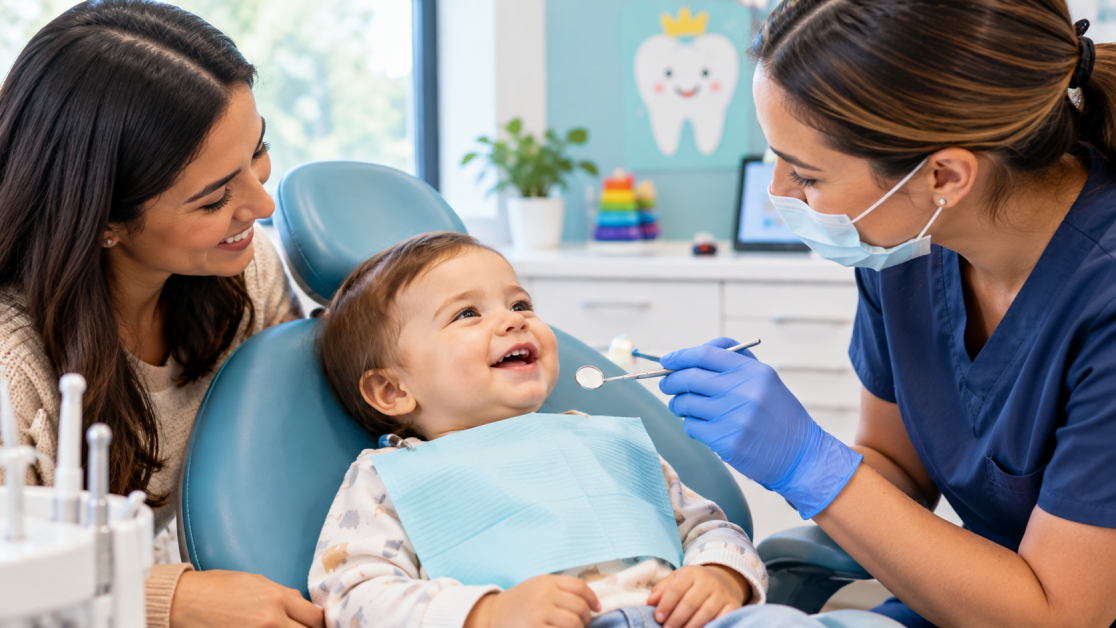
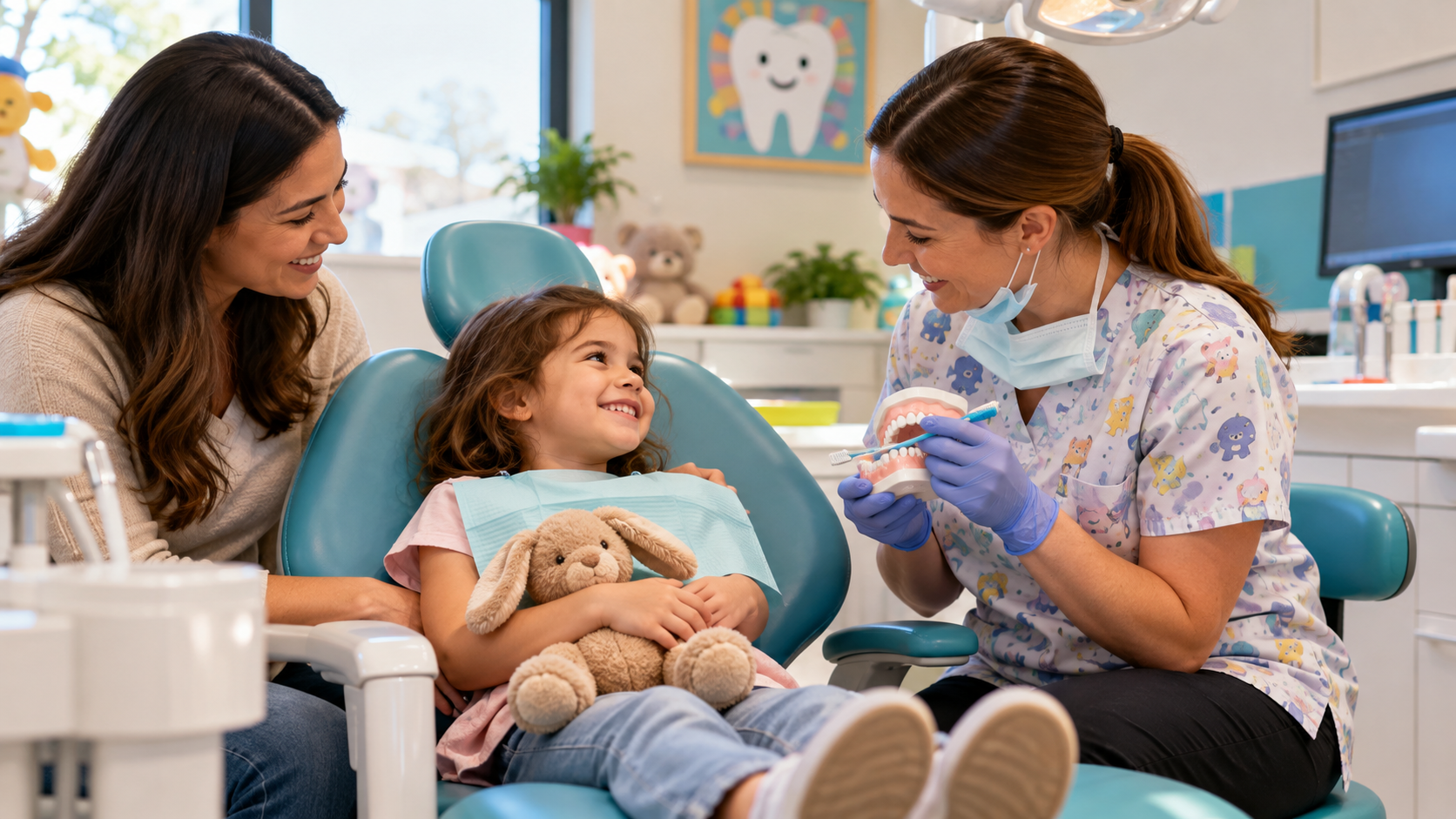
Every child sits in the dental chair carrying something different. For some kids, that something is a diagnosis, a sensory profile, a communication style, or a medical history that shapes how a checkup needs to go. Dental care for kids with special needs starts from that reality. It is not a scaled-down version of a regular appointment. It is a different plan built around the child in front of us.
At Grin Gallery, our special needs dentistry is designed to meet children where they are, whether that means a longer visit, a quieter room, extra breaks, or a slow first appointment where nothing clinical happens at all. This guide walks through what actually changes when a child has additional needs, which conditions we plan for, how those needs affect the teeth and gums, and what a calm, well-run appointment looks like from the first hello to the last high five.
Why Dental Care for Kids With Special Needs Is Not One-Size-Fits-All
A standard pediatric appointment assumes a lot. It assumes the child can sit for a set amount of time, understand simple instructions, tolerate bright lights and new sounds, open on request, and tell someone when something hurts. Plenty of children can do all of that. Plenty cannot, and that has nothing to do with behavior or parenting.
When a child has autism, a motor condition, an intellectual disability, or a complex medical history, those quiet assumptions stop holding. A bright overhead light might feel unbearable. The whir of a polisher might register as alarming rather than routine. A child who is nonverbal cannot point to the aching tooth, so the dentist has to read other cues. A child with low muscle tone may struggle to keep the mouth open long enough for a cleaning.
Good dentistry for special needs patients accounts for all of this before the child ever arrives. We adjust the pace, the environment, the communication, and sometimes the treatment approach itself. The goal is not just clean teeth today. It is a child who trusts the process enough to come back, because oral health is a lifelong project and fear is the fastest way to derail it.
What Makes These Dental Visits Different From a Standard Checkup
The clinical work can look similar on the surface. A cleaning is still a cleaning. What changes is nearly everything around it.
Time is the first difference. A typical checkup might run twenty minutes. A first visit for a child with sensory sensitivities might use that same twenty minutes just to sit in the room, touch the instruments, and hear what each one does. We build in room for that, so no one feels rushed.
Communication is the second. Our team leans on a show-and-practice style, where the child sees and feels each step on a finger or a hand before it goes near the mouth. For families raising a child with additional needs, that predictability matters more than speed. Our board-certified pediatric dentist, Dr. Williams, and the team plan each appointment around what keeps a specific child regulated, not around a stopwatch.
The environment is the third. Lighting, sound, seating, and even the order of events can be adjusted. Some children do better in a parent’s lap. Some need a weighted blanket or a favorite toy in hand. Some need the suction tested on their finger three times before they will believe it will not hurt.
The fourth difference is flexibility in the plan itself. If a child can only tolerate two of four planned tasks on a given day, we do those two well and bring the child back rather than forcing a full appointment that ends in tears. Progress counts, even when it is slower than a textbook timeline.
The Range of Special Needs We Plan For
Special needs is a broad phrase. It covers developmental, sensory, physical, behavioral, and medical differences, and many children live at the intersection of several of these. Here is how we think about the most common categories and what each one tends to change about a dental visit.
Autism Spectrum Disorder
Children on the autism spectrum often experience the dental office as a flood of unfamiliar input. New smells, textures, sounds, and lights can be overwhelming, and changes to routine can be hard. Many autistic children also have specific food preferences or hold food in the mouth longer, which can raise cavity risk. Predictability, visual supports, and a consistent team from visit to visit make a real difference. Because we already serve many autistic patients, our staff is comfortable slowing down and following the child’s lead.
ADHD and Attention Differences
A child with ADHD may find it genuinely hard to stay in the chair, not because they are misbehaving, but because sitting still is the hard part. Short, focused bursts of work with movement breaks in between often go better than one long stretch. Clear, simple instructions and a bit of playful energy from the team help keep attention where it needs to be.
Down Syndrome
Children with Down syndrome frequently have dental differences worth watching. Teeth may come in later than usual and in an unusual order. Some teeth may be small, oddly shaped, or missing entirely. Crowding and bite differences are common, and gum disease tends to show up earlier and more often than cavities do. That combination means these children benefit from steady monitoring and a strong home routine.
Cerebral Palsy and Motor Conditions
Cerebral palsy and related motor conditions affect the muscles a child uses to chew, swallow, and keep the mouth open. Reflux is common and can wear down enamel over time. Grinding is common too. Home brushing can be genuinely difficult when a child cannot hold still or control the jaw, so we spend real time coaching caregivers on positioning and tools that make daily care safer and easier.
Sensory Processing Differences
Some children are not on the autism spectrum but still process sensory input in ways that make a dental office tough. The taste of toothpaste, the feel of gloved hands, the vibration of a cleaning, or the spray of water can each become a sticking point. We identify the specific triggers and work around them, swapping flavors, adjusting textures, and letting the child preview sensations on their own terms.
Intellectual and Developmental Disabilities
For children with intellectual or developmental disabilities, the challenge is often comprehension and cooperation rather than physical limitation. Instructions may need to be broken into very small steps and repeated calmly. Familiar faces and a consistent routine help a child know what to expect, which lowers anxiety and makes each visit build on the last.
Seizure Disorders and Epilepsy
Children with seizure disorders bring a few specific considerations. Certain seizure medications are known to cause gum swelling or overgrowth, which changes how we clean and monitor the mouth. We also plan the appointment with the child’s medical history in mind and keep communication open with caregivers about triggers and timing.
Vision and Hearing Differences
A child who is blind or has low vision relies on touch and sound to understand what is happening, so we describe each step out loud and let them feel instruments before use. A child who is deaf or hard of hearing may rely on sight, so we make sure they can see our hands and faces, and we bring in an interpreter or a caregiver’s help when that supports clear communication.
Physical and Mobility Needs
Some children use wheelchairs or have physical conditions that make transferring to a standard dental chair difficult or uncomfortable. We adapt positioning to keep the child safe and supported, and we plan the visit’s logistics so families are not caught off guard at the door.
Medically Complex and Genetic Conditions
Heart conditions, immune differences, bleeding disorders, feeding tubes, and genetic conditions that affect enamel all shape how we treat a child. Some conditions call for coordination with a child’s physician before certain procedures. Some genetic conditions leave enamel thin or soft, which heightens the need for early detection and prevention. We treat the whole child, not just the tooth.
Dental Anxiety and Behavioral Challenges
Fear is its own kind of special need. A child can be developmentally typical and still panic in a dental office because of an experience or general anxiety. For these kids, desensitization visits, where the child comes in just to look, listen, and leave with a win, can rebuild trust before any real work begins.
How Special Needs Affect a Child’s Oral Health
Additional needs do not only change the appointment. They often change the mouth itself, which is why prevention carries extra weight for these families.
Medication is a big factor. Many long-term childhood medications are sweetened to make them easier to take, and daily sugar exposure feeds decay. Other medications reduce saliva, and a dry mouth loses one of its best natural defenses against cavities. Saliva rinses away food and helps neutralize acid, so when it runs low, teeth are more exposed.
Diet plays a role too. Children with feeding challenges, texture sensitivities, or reflux may eat a narrower range of foods, graze more often, or keep food in the mouth longer. Frequent snacking keeps the mouth in an acidic state, and pooled food gives bacteria more to work with.
Home care is the third piece. Brushing and flossing are difficult when a child cannot sit still, dislikes the sensation, or lacks the necessary motor skills. Gums that are not cleaned well can become inflamed, and for some children, that inflammation appears faster and more severely.
None of this means decay and gum problems are inevitable. It means the margin for error is smaller, and steady prevention matters more. That is exactly where a practice that understands these patterns earns its keep.
Why Do Special Needs Kids Grind Their Teeth?
Parents ask this one often, so it deserves a real answer. Grinding, known as bruxism, shows up more frequently in children with certain developmental and neurological conditions, including cerebral palsy and some intellectual disabilities. So why do special needs kids grind their teeth more than their peers?
A few reasons stand out. Some grinding is a self-soothing behavior, a way to manage sensory input or stress when a child cannot express discomfort in words. Some is tied to muscle control differences associated with motor conditions, in which the jaw simply does not rest as it typically would. Sleep disruption, reflux, and certain medications can also play a part.
Occasional grinding in young children is common and often fades on its own as they grow. Persistent grinding is worth watching because, over time, it can wear down enamel, flatten the biting surfaces, and lead to jaw soreness or sensitivity. We monitor wear patterns at each visit and discuss options when grinding becomes a problem. Parents who want a deeper look at the causes and timing can read more about teeth grinding in children, which walks through what is normal and when to raise it with us.
What Comfortable Dental Visits for Kids With Special Needs Look Like
Comfort is not a bonus feature here. It is the whole strategy: a comfortable child cooperates, and a frightened one shuts down. Comfortable dental visits for kids with special needs share a few traits.
They are predictable. The child knows what is coming because we told them and showed them first. They are paced to the child, with breaks whenever a child needs to regroup. They use the environment as a tool, with softer lighting, quieter spaces, and calming items on hand for children who are easily overstimulated.
They also respect the caregiver as the expert. Parents know their child’s signals, triggers, and comfort strategies better than anyone, and we build the plan around that knowledge rather than overriding it. When a parent says a particular word, or a toy helps their child settle, we use it.
Finally, they measure success honestly. Sometimes a great visit is a full cleaning and exam. Sometimes a great visit is a child who sat in the chair for the first time without crying. Both move the child forward, and both count.
Sedation and Gentle Treatment Options
Not every child can complete needed treatment while fully awake, and pushing through is rarely the right answer. When comfort strategies are not enough on their own, we have gentler paths.
Our approach leans toward minimally invasive dentistry whenever possible, using conservative techniques that treat problems early and preserve as much of the natural tooth as we can. Catching decay early often means simpler, quicker treatment, which is a real advantage for a child who tolerates only short appointments.
For children who need more support to get through care, sedation options are available and matched to the child, ranging from lighter approaches that help an anxious child relax to deeper sedation for more involved work. Dr. Williams discusses the options with families, reviews the child’s medical history, and proceeds only when everyone is comfortable with the plan. When restorative work is needed, our team handles the common dental procedures children require with the same gentle, step-by-step care we bring to a routine cleaning.
How We Prepare Your Child Before the First Visit
A lot of the work happens before the appointment even starts, and families can set the tone at home.
Talk about the visit in simple, positive terms without overloading the child with detail. For many children, a social story or a few pictures of the office ahead of time takes the fear out of the unknown. Practicing at home helps too, whether that is counting teeth with a toothbrush, playing dentist with a stuffed animal, or letting the child watch a calm sibling brush.
Timing matters. Book the appointment for the part of the day when your child is usually most regulated, not right before a nap or at the end of a long, busy afternoon. Bring the comfort items that work at home, whether that is headphones, a fidget, a favorite blanket, or a preferred snack for after.
The most useful thing you can do is tell us what we need to know. Share your child’s triggers, calming strategies, communication style, and any medical details in advance so we walk in prepared rather than learning on the fly. The more we know, the smoother the first visit goes.
Preventive Care That Fits Your Family’s Routine
Because prevention carries extra weight for children with additional needs, we build routines that families can actually maintain at home. Strong preventive dental care is the difference between managing small issues early and scrambling to fix bigger ones later.
That starts with regular checkups at a rhythm that fits your child, which for some children means more frequent visits so problems get caught before they grow. It includes practical coaching on brushing and flossing that accounts for your child’s motor skills and sensory profile, plus tips on tools that make daily care easier, from adapted brush handles to flavor swaps for kids who reject standard toothpaste. We also talk through diet and medication factors that raise cavity risk, so families can make small adjustments that add up.
The aim is a home routine that is realistic, not perfect. A brushing plan a family can sustain beats an ideal one that falls apart by Wednesday.
Handling Dental Emergencies With Extra Care
Accidents and sudden pain happen to every child, and they can be harder to read in a child who cannot easily describe what hurts. A child who is nonverbal might show pain through changes in behavior, sleep, or eating rather than words, so caregivers often become the interpreters.
When your child has a knocked-out tooth, a bad break, swelling, or signs of infection, quick action matters. Our team provides pediatric dental emergency care for patients of record, and we bring the same calm, adapted approach to urgent visits that we use for routine ones. Knowing your child already has a dental home that understands their needs takes real pressure off a stressful moment, because you are not starting from scratch with a stranger during a crisis.
Starting Early Makes Every Visit Easier
The earlier a child with special needs builds a relationship with a dental office, the easier future visits tend to be. Early exposure lets a child grow familiar with the sights, sounds, and people while the stakes are low, long before any significant treatment is on the table.
That is why we encourage families to begin with infant dental care around the time the first tooth appears or by the first birthday. Early visits are short and gentle, focused on comfort, familiarization, and providing parents with the guidance they need during those first years. For a child who will need extra support down the road, that head start is one of the most valuable investments a family can make.
Special Needs Dentistry in North Atlanta and Chastain Park
Families across North Atlanta, Chastain Park, and the surrounding neighborhoods deserve a dental home where every child is genuinely welcome, whatever their abilities. At Grin Gallery Pediatric Dentistry, that welcome is built into how we run every appointment, from the design of our space to the pace we keep in the chair.
Dr. Donielle Williams is a board-certified pediatric dentist with training in caring for children who have developmental, sensory, physical, and medical differences. Our team treats families as partners, takes the time each child needs, and celebrates progress, however it comes. For families looking to make regular care more predictable and affordable, our membership plans offer a straightforward way to stay on top of preventive visits without insurance hassles.
If your child has additional needs and you are looking for a practice that will slow down and get it right, we would love to help. You can reach our Chastain Park office at 404-458-9908 to talk through your child’s needs and set up a first visit at a pace that works for them.
Final Thoughts
Dental care for kids with special needs is different because children are different, and pretending otherwise is how kids end up scared, skipped over, or under-treated. The right approach starts with understanding the child, adjusts the visit to fit them, and treats prevention as the long game it is. When a practice gets those pieces right, even a child who once dreaded the dentist can learn to walk in without fear. That is the outcome we work toward with every family we see.
Frequently Asked Questions
At what age should a child with special needs first see the dentist?
The general guidance is the same as for any child, around the first tooth or the first birthday, whichever comes first. Starting early is even more valuable for children with additional needs, because it builds familiarity while visits are short and low-pressure, long before any bigger treatment is needed.
Will my child need sedation for a cleaning?
Not usually. Most cleanings and exams can be done with comfort strategies alone, such as extra time, breaks, and a calm environment. Sedation is reserved for children who need more support to get through care, and it is always discussed with families and matched to the child’s medical history first.
My child is nonverbal. How will you know if something hurts?
We rely on close observation and on you. Caregivers are often the best interpreters of a nonverbal child’s cues, so we ask about your child’s usual signals of discomfort and watch for changes in behavior, expression, and body language during the visit.
How do I prepare a child with sensory sensitivities for a dental visit?
Preview the experience at home with pictures or a simple story, practice with a toothbrush or a pretend dentist game, and bring comfort items that work for your child. Book the appointment for a time of day when your child is usually calm, and tell us the specific sounds, textures, or lights that tend to be triggers so we can plan around them.
Why do special needs kids grind their teeth more often?
Grinding is more common in children with certain neurological and developmental conditions. It can be a way to self-soothe, a result of differences in muscle control associated with certain motor conditions, or a response to stress, sleep issues, or reflux. Occasional grinding is often normal, but persistent grinding is worth monitoring for enamel wear.
Do children with special needs need more frequent dental visits?
Sometimes. Because factors like medication, diet, and home-care challenges can raise the risk of cavities and gum problems, some children benefit from checkups more often than twice a year. We set the schedule based on your child’s specific needs.
Can you accommodate a child who uses a wheelchair?
Yes. We adapt our positioning to keep your child safe and supported, and we plan the logistics so the visit goes smoothly. Let us know your child’s needs when you book so we can prepare.
What should I do if my child with special needs has a dental emergency?
For a knocked-out tooth, a serious break, swelling, or signs of infection, act quickly and call our office. As an established patient, your child already has a dental home that understands their needs, which makes an urgent visit far less stressful than starting over somewhere unfamiliar.